Inkbit’s Vision-Controlled Jetting technology combines precision material jetting with real-time machine vision to ensure every layer prints exactly as intended.
During the build process, liquid photopolymer is jetted in microscopic droplets to form each layer of the part. After deposition, the layer is partially cured and scanned by a high-resolution vision system that measures the surface geometry.
The printer compares this scan to the original CAD model and automatically adjusts the next layer to correct any deviation. This closed-loop process repeats for every layer, allowing the system to maintain high-dimensional accuracy while printing complex geometries and engineering materials.
Material Jetting Microscopic droplets of liquid photopolymer are precisely deposited to form each layer of the part.
Layer Measurement A high-resolution vision system scans the printed layer to create a detailed surface map.
Digital Comparison The scanned layer is compared against the original CAD geometry to identify any variation.
Real-Time Correction The printer automatically compensates on the next layer, ensuring the final part matches the intended design.
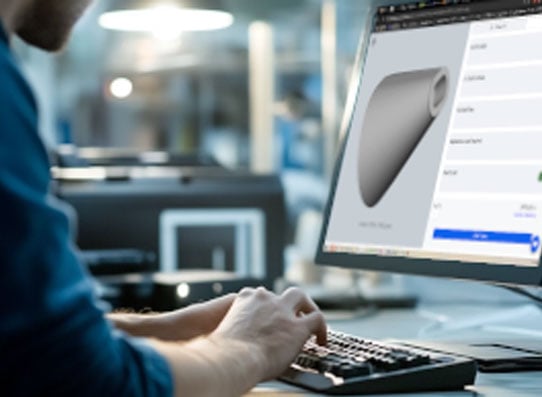
Upload your design, customize your options, and get instant pricing for fast, precise manufacturing. Enjoy FREE shipping on all orders plus 30% off your first RapidQuotes™ order with code NEW30.