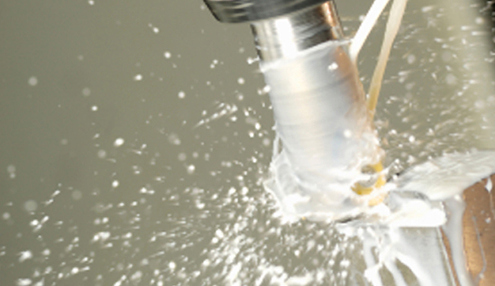
CNC machining is traditionally used to manufacture low volume, end-use parts, but it has also been adopted as a secondary process for additive manufacturing technology. Companies often will 3D print plastic or metal parts and then CNC machine them for the following reasons:
- Dimensional accuracy – Industries with high functional and tolerance requirements, such as automotive, medical and consumer products manufacturing, need to hit repeatable, tight specs. Most additive manufacturing technologies, such as Fused Deposition Modeling (FDM) can achieve up to ±0.005 in., but that’s not enough for some critical part features. With CNC machining you can bring tolerance down to ±0.002 in. which can make a huge difference if you’re producing an assembly aid, manufacturing fixture or any in-process tool with a long service life.
- Speed – The second reason why companies combine the two technologies is speed. Accounting for print time, CAD/CAM set up and machining, the process is still much faster than designing and producing a tool for injection molding. And 3D printing and machining give engineers more flexibility in the timeline to make design improvements. It just involves updating CAD/CAM files, and printing and machining a new part, whereas making changes to an injection molding tool can be nearly impossible and expensive, causing major delays in production.
The most widely used machining technique for additive manufactured plastic parts is horizontal or vertical 3-axis milling because of its ability to move in the X, Y and Z planes. For more complex features and geometries, we recommend 5-axis milling, which can rotate and tilt on the A and B-axis to reach undercuts and small features.
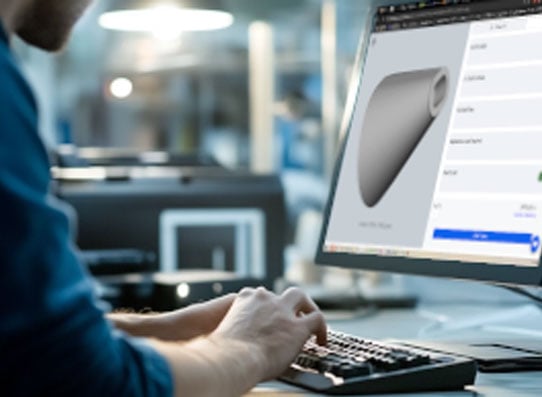
If your application requires specific dimensions, you will need to adjust your part’s 3D CAD data accordingly for CNC machining. These are a few things to consider when preparing your design files:
- Build in excess material – Additional material needs to be built into the raw 3D printed part so that when it’s machined, there are enough layers for the tool to remove to achieve the correct spec.
- Note areas of tight tolerance – When consulting with the service bureau project engineer be sure to show them the critical dimensions that will need to be machined. Often they recommend design adjustments to optimize the build for machining, such as increasing certain wall thicknesses or going up a tip size.
- Make critical features accessible – Place components that need to be machined to spec in an easy-to-reach area. Even 5-axis mills can’t reach some 3D printed geometries so move application-critical features to a tool-accessible spot if possible.
Our experts are here to help make sure your project is a success, so don’t be afraid to ask questions.