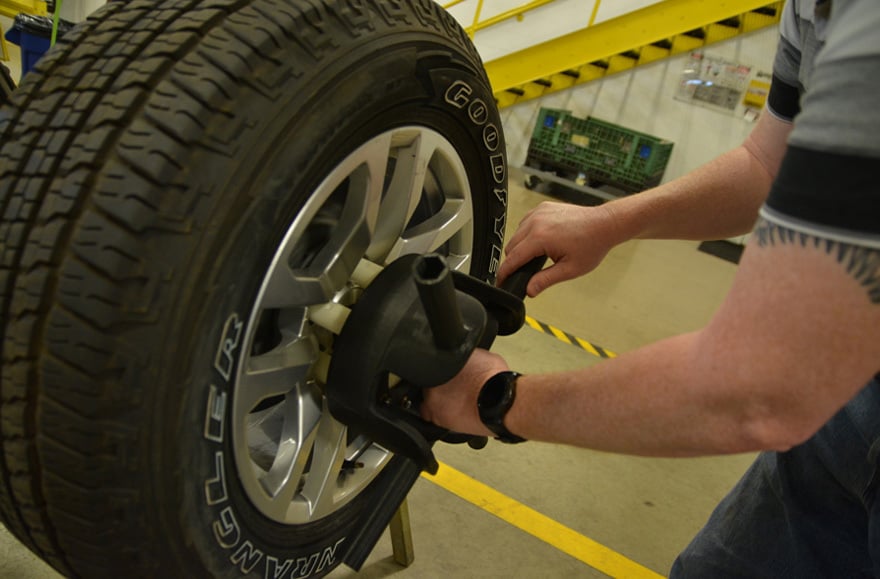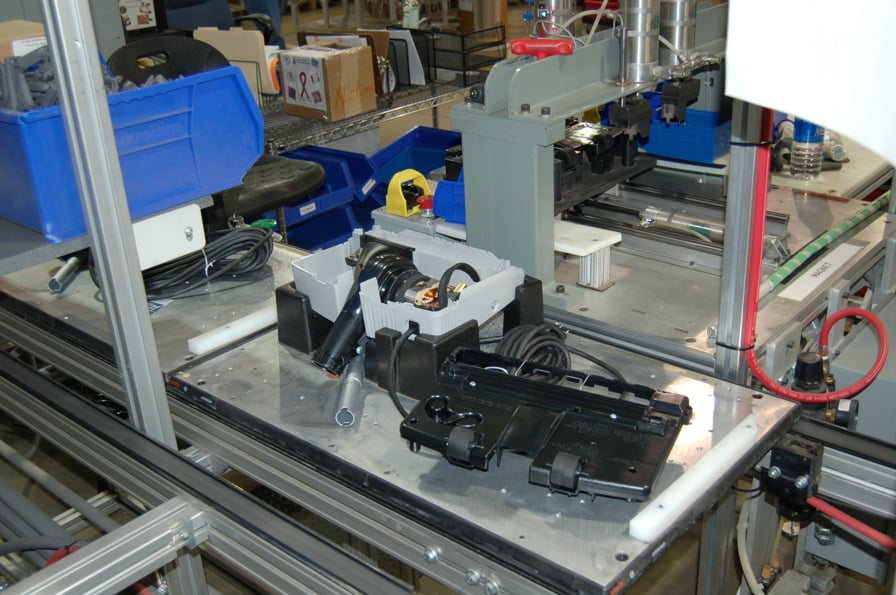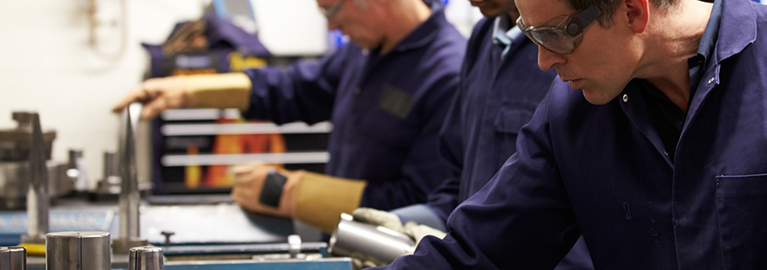


Whether it be a jig, clamp, welding fixture, or vise, fixturing is essential to certain manufacturing processes. Fixturing aims to hold, support, position, or secure workpieces, facilitating accurate and consistent results. Fixturing techniques lead to greater accuracy, productivity, safety, and product quality.
Fixturing is the process of designing or using tools to securely hold a workpiece in place during manufacturing. It ensures stability, precision, and repeatability for tasks like machining, assembly, or inspection. Proper fixturing prevents movement, reduces error, and increases efficiency in production workflows.
Manufacturing fixtures are specialized tools used to secure and position workpieces during production processes. The four primary types include assembly, inspection, marking, and welding fixtures, which collectively improve accuracy, repeatability, and efficiency across industries like automotive, aerospace, and electronics.. The 4 main type of fixtures consist of assembly fixtures, inspection fixtures, marking fixtures, and welding fixtures.
Assembly fixtures are specialized manufacturing tools designed to secure, position, and align components during the production process. By holding parts in a fixed orientation, these fixtures ensure accurate fit and function, resulting in increased assembly speed, reduced human error, and higher overall productivity in sectors such as automotive, appliance production, electronics, and aerospace.
Inspection fixtures are precision tools used in quality control to securely hold workpieces in a repeatable orientation. They are primarily integrated with CMM equipment to ensure measurement accuracy and efficiency, allowing manufacturers to verify that parts meet strict engineering tolerances. Inspection fixtures are used mainly in aerospace, electronics, automotive, and precision manufacturing.
Marking fixtures are specialized manufacturing apparatuses designed to secure and orient workpieces for precise identification. They ensure consistent placement of branding, serial numbers, and barcodes, primarily through laser marking or engraving, to guarantee permanent part traceability across industries such as electronics, automotive, and metalworking. The aerospace, electronics, automotive, and metalworking industries utilize marking fixtures.
Welding fixtures are specialized production tools used to secure and position workpieces during the welding process. These devices stabilize components to maintain exact alignment and geometry, which directly results in superior weld quality, high repeatability, and increased manufacturing productivity in automotive, aerospace, construction, and metal fabrication industries.
Traditional methods such as fabrication or machining provide certain benefits of fixturing for manufacturers. Specific customization can be achieved, and this results in the accurate fit and functionality of fixtures. These bespoke fixtures can be seamlessly integrated with existing manufacturing equipment or processes. The costs associated with traditional methods may be low since it is easy for manufacturers to produce fixtures in-house or source them at a reasonable price. If the fixture components need to be revised, traditional fixturing can be readily adjusted or reworked.
Although there are advantages, traditional methods also pose challenges for manufacturers. There is a lack of repeatability for fixture components and a high-volume order of fixtures may produce parts that aren’t exactly the same. In terms of production levels, traditional methods are inefficient and lead to longer wait times. This can result in missed deadlines, the loss of profits, and damage to the business’s reputation.
Another option to produce fixturing is to 3D print the parts. With additive manufacturing, complex geometries can be achieved which may be difficult using traditional methods. This design freedom allows for optimized performance and functionality. To test out different applications and fixture assembly, rapid prototyping is possible with additive manufacturing. By quickly prototyping, designs can be iterated and improved easily.
Additive manufacturing also provides many materials to choose from, including thermoplastics, metals, composites, and even specialized materials with specific properties. Specifically, FDM printers offer twenty-six different materials to choose from, including Nylon 6, Polycarbonate (PC), ABS-CF10, ASA, and PPSU.
Regarding lead time, additive manufacturing accomplishes faster production since complicated tooling or setup isn’t required, resulting in greater savings than traditional methods. Oreck Manufacturing utilized the Fortus 3D Production Systems, using FDM technology, to 3D print assembly fixtures. This only cost Oreck $35,000 as compared to the $100,000 it would have cost with traditional molding and casting. The 65% savings are due to the Fortus’s quick turnaround time and the ability to print the parts in-house.
Since fixturing is vital to specific manufacturing processes, the way in which you produce fixtures will impact your overall outcome. No matter if you choose traditional methods or additive manufacturing, it is important to weigh out what you would like to achieve with your fixturing. Each of the four main types of fixtures lead to more consistent results which affect the success of your operation. Fixturing can be a determining factor for the quality and accuracy of a product.