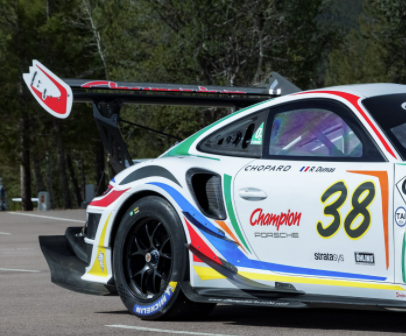
On June 27, Champion Motorsports raced to the top of Pikes Peak in the 99th running of the Pikes Peak International Hill Climb in Colourado Springs, Colo., U.S.A. This exciting 12.42-mile (19.98 km) race course includes 156 turns and takes racers from 9,390 (2.8 km) to over 14,100 (4.3 km) feet in elevation. The Champion Motorsport team walked away winning in the Time Attack 1 and taking second place overall.
For optimal performance and aerodynamics, and to ensure that the car could perform safely at altitude - the air has 43 percent less oxygen than sea level, Champion Motorsport needed to make specific modifications to their 911 Porsche GT2 RS Clubsport car.
Typical sandwich cores are made using aluminum, Nomex honeycomb or foam that is shaped to fit the core of the final part – these materials must be shaped to fit the core of the final part, a process requiring hours or days of manual labour and shop time. By using 3D printing to create the sandwich core for the wing, the team was able to use a first-of-its-kind tool-free process, saving substantial time and expense.
“Speed was the priority when creating this wing,” said Chris Lyew from Champion Motorspot. “We had test dates we had to hit and without this tool-free process, we could not have met these deadlines.”
The five foot by seven-foot wing was 3D printed in seven pieces in Minnesota and shipped to Champion’s headquarters in Florida. Upon arrival at the Champion garage, the team assembled the wing and laminated the piece with pre-preg carbon fibre, vacuum bagged the assembled piece and oven cured it.
“We were able provide Champion with a part that allowed them to quickly and easily modify their car for ultimate performance at extreme altitudes – all while saving time and expense,” said Pat Carey, senior vice president of strategic growth for Stratasys.”
For more information about Stratasys applications for the automotive industry, visit www.stratasys.com/automotive. To learn more about Champion Porsche visit www.champion-porsche.com/blog and to learn more about the Pikes Peak International Hill Climb, visit www.ppihc.org.