English
English
Case Study

Commercial products manufacturer utilise ABS-CF10 material.


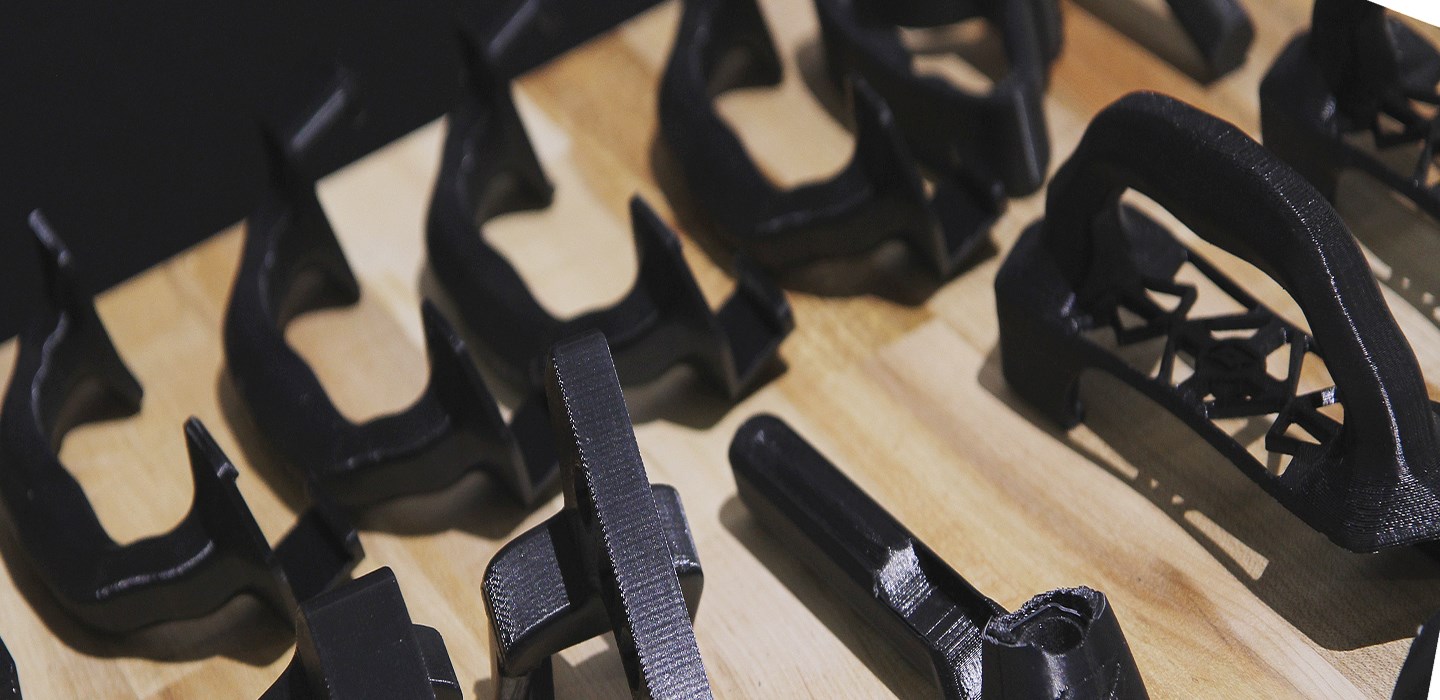
CF Tool hero image.

Learn how engineers used FDM polymer additive manufacturing due to its design freedom and prototyping capabilities.

Challenge.

The development of a new hand-held tool by a leading commercial products manufacturer required prototyping the handle design. The handle’s configuration is important because it must support the tool while providing good balance and user comfort.


Traditional prototyping meant developing a casting, using a $12,500 mould, or machining handles from solid aluminum billet. Both methods posed costly and time-consuming restrictions. Additionally, both processes meant the handle design would need to accommodate typical manufacturability constraints such as draft angles, cutter size and axis movement. This limited the design options. 

Solution.

Engineers used FDM® polymer additive manufacturing instead of machining or casting due to its design freedom and fast, cost-effective prototyping capabilities. To ensure the prototype handles would have sufficient strength and stiffness, engineers used carbon fibre ABS-CF10 material, since standard ABS allowed too much flex. ABS-CF10 combines ABS plastic with chopped carbon fibre, 10% by weight. The result is a composite material 50% stiffer than standard ABS, providing sufficient rigidity for the prototype handle.

Impact.

For this particular manufacturer, 3D printing 10 different prototype handles using carbon fibre ABS-CF10 cost $200 in material. Compared to the $12,500 casting mould cost, 3D printing represents a 98% cost savings. Although the casting mould could generate up to 5000 handles, it can only produce a single handle configuration. Design changes would require another mould tool, unlike 3D printing, which can produce multiple designs for significantly less cost. The time to produce the first 3D printed handle was 12 hours, compared to 1 – 3 weeks to machine a prototype or develop a casting tool. This represents an 85-95% time savings.


In total, the use of additive manufacturing resulted in significant time and cost savings over traditional prototyping methods, helping accelerate product development. 

cf tool figures

Download the case study

Related Content

Composite 3D Printing Solutions Guide

Improve factory floor operations with 3D printed carbon fibre tooling.

Learn how Stratasys is solving everyday problems on the manufacturing floor with 3D printed carbon fibre tooling.

View more
carbon fiber

3D printing for the factory floor

There's finally a solution to the search for efficiency and safety on the factory floor. Learn more about how 3D printing can make your production process safer and more efficient.

View more
drone prototype designed by Taga

3D Printing for Drone and UAV Manufacturing

Discover how 3D printing accelerates drone and UAV production. Learn how additive manufacturing improves flight performance, customization, supply chains, and cost-efficiency.

View more
Composite 3D Printing Solutions Guide

Learn how Stratasys is solving everyday problems on the manufacturing floor with 3D printed carbon fibre tooling.

carbon fiber

There's finally a solution to the search for efficiency and safety on the factory floor. Learn more about how 3D printing can make your production process safer and more efficient.

drone prototype designed by Taga

Discover how 3D printing accelerates drone and UAV production. Learn how additive manufacturing improves flight performance, customization, supply chains, and cost-efficiency.